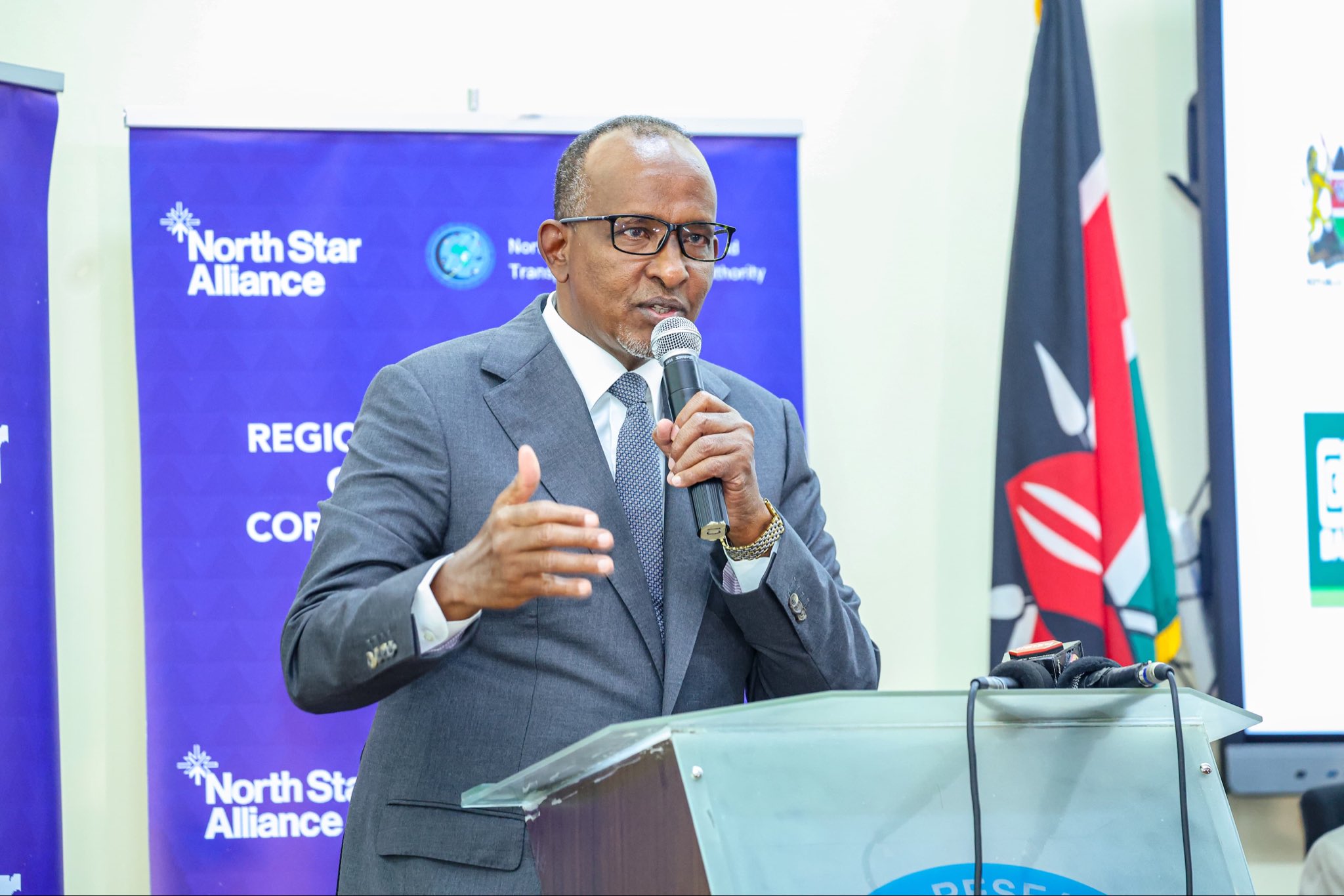
Health Cabinet Secretary Aden Duale has warned that Africa’s rapidly expanding transport networks are driving new public health vulnerabilities, urging regional governments to strengthen surveillance, invest in innovation and build resilient systems that can detect and respond to emerging threats.
Speaking at the 2nd Transport Corridors & Health Conference held at the Kenya Medical Research Institute (KEMRI) on Monday, Duale said rising mobility is reshaping disease patterns across the continent.
He noted that increased mobility continues to influence the spread of diseases and shape regional development, pointing to recent cases of Marburg virus disease in Ethiopia, anthrax in Kenya, and cholera outbreaks across East Africa as clear reminders of the health risks that follow major transport routes.
The conference, themed “Innovations and Partnerships for Healthy & Prosperous Corridors,” was convened by the Northern Corridor Transit and Transport Coordination Authority and brought together experts from across the region to examine how health, trade and development can be better integrated.
The CS stressed that corridor health challenges are not limited to infectious diseases. He warned of the rising burden of non-communicable diseases, mental health concerns, driver fatigue, substance use, and road safety issues that affect productivity, security and the region’s economic ambitions.
He highlighted Kenya’s progress in cross-border surveillance, laboratory coordination and genomic monitoring, saying these capabilities have strengthened the country’s readiness to prevent and respond to outbreaks.
The CS also praised the North Star Alliance’s Blue Box/Roadside Wellness Centres, which served over 200,000 clients last year, describing them as models of practical innovation.
Duale emphasised the role of technology, artificial intelligence and data-driven planning, saying the tools are increasingly essential in tracking, predicting and managing health risks along transport corridors.
He appealed for deeper cooperation between governments, researchers, regional bodies, communities, and the private sector, saying “transport corridors must serve not only as channels of trade but also as pathways to opportunity, resilience, and improved health outcomes.”
The CS urged stakeholders to commit to long-term financing and practical, scalable solutions, arguing that sustainable health systems are central to realising the region’s development agenda, including Universal Health Coverage (UHC) and the Bottom-Up Economic Transformation Agenda (BETA).
The Nairobi meeting brought together senior officials and technical leaders including KEMRI Director General Prof. Elijah Songok, North Star Alliance Chairperson Bernard Kadasia, Principal Secretary for Public Health and Professional Standards Mary Muthoni, and IGAD Head of Mission to Kenya Fatma Adan, among other dignitaries.
Duale concluded with a call for unity of purpose, saying that the region’s health and economic future depend on effective partnerships and robust systems that protect citizens along Africa’s busiest and most vulnerable transport corridors.































Comments
Sign in with Google to comment, reply, and like comments.
Continue with Google